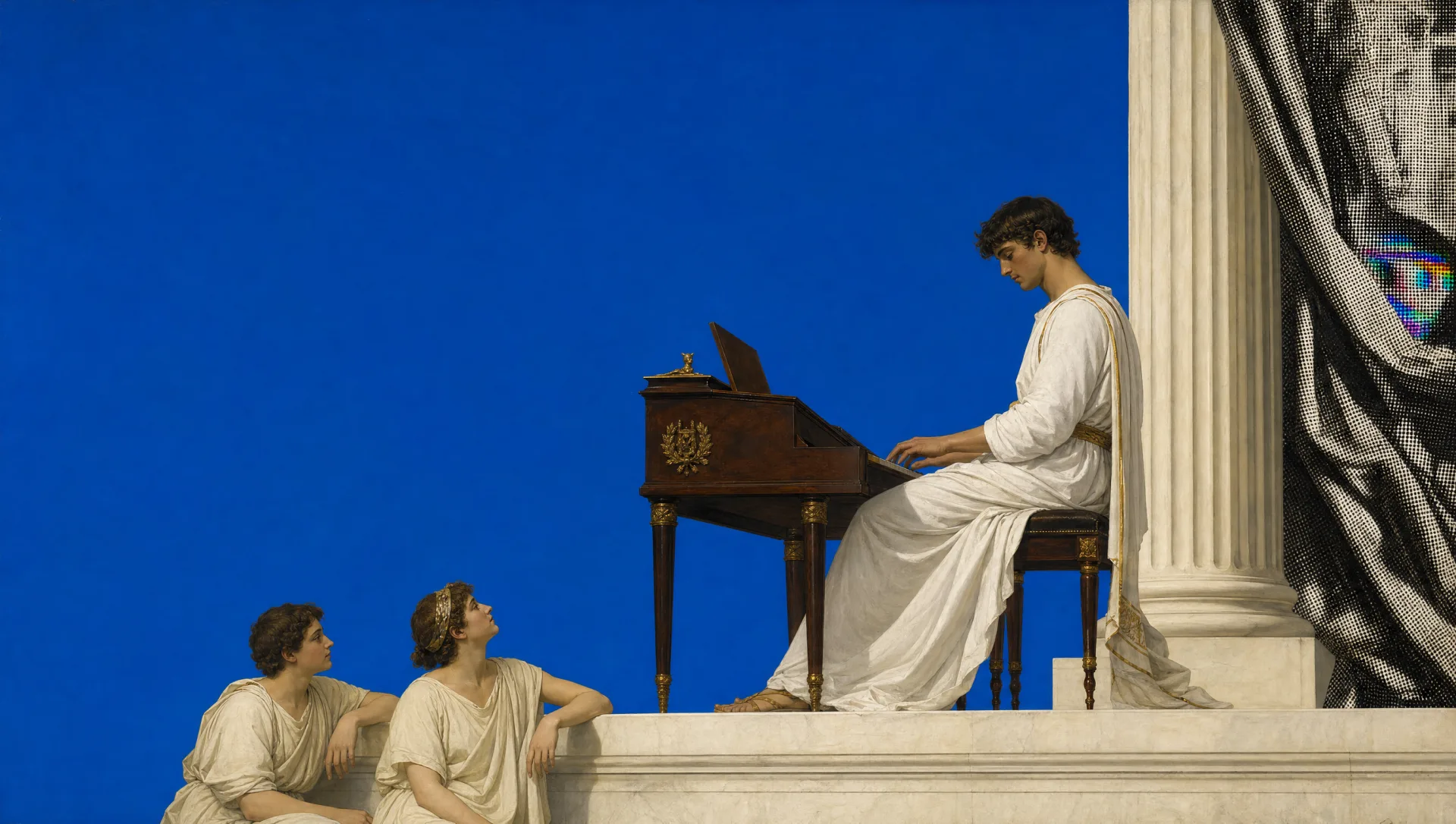

Tutti — a room for listening

Come in.進來坐坐。

One baton. One score. A little time to hear what is already there.一支指揮棒,一份樂譜,留一點時間,聽見音樂本來就在那裡的東西。

Enter the room ↓走進房間 ↓

Scroll at your own pace. The picture waits for you.照自己的步調往下走。畫面會等你。

A golden conductor baton rising over a blue neoclassical room

01 — Before the sound01 — 聲音之前

The baton rises.指揮棒升起。

A room does not need much. A hand, a little gold, and a reason to listen.一個房間不需要太多東西。一隻手,一點金色,還有一個聆聽的理由。

02 — The room opens02 — 房間打開

The air finds a line.空氣找到一條線。

The baton passes. Space gathers around it. You can feel the first phrase before you name it.指揮棒揮過。空間在它周圍聚攏。你還沒說出名字,就已感到第一句樂句。

03 — The score03 — 樂譜

A score is a path.樂譜是一條路。

The marks are not decoration. They tell the body when to wait, lean, return, and let go.那些記號不是裝飾。它們告訴身體何時等待、傾斜、回來,然後放手。

Open Chopin's score when you are ready. Follow the notes →準備好時,打開蕭邦的樂譜。跟著音符走 →

04 — The listening body04 — 聆聽的身體

You are part of the room.你也是房間的一部分。

A shoulder softens. The breath changes. A small turn in the music becomes something you can carry.肩膀放鬆。呼吸改變。一個小小的轉折,變成你可以帶走的東西。

05 — When the page waits05 — 當頁面等待

Stay with the last light.留在最後的光裡。

Start with Chopin's Nocturne 20. The recording, the story, and the score are waiting in the same room.從蕭邦《夜曲二十號》開始。錄音、故事和樂譜,在同一個房間裡等你。

Listen to Chopin →聽蕭邦 →

This room is showing its still image. The story below is ready to read.這個房間正在展示靜態畫面。下面的故事已經準備好。

Go to the recording →前往錄音 →
01 / Before the sound

The baton gives the room a door.指揮棒為房間開了一扇門。

It does not explain the music. It makes a little space for it to arrive.它不解釋音樂,只為音樂的到來留出一點空間。

LookThe golden shaft and its small orb stay inside the picture, like a thing already in the room.金色棒身和小小的圓珠留在畫面裡,像本來就在房間裡的東西。
02 / The room opens

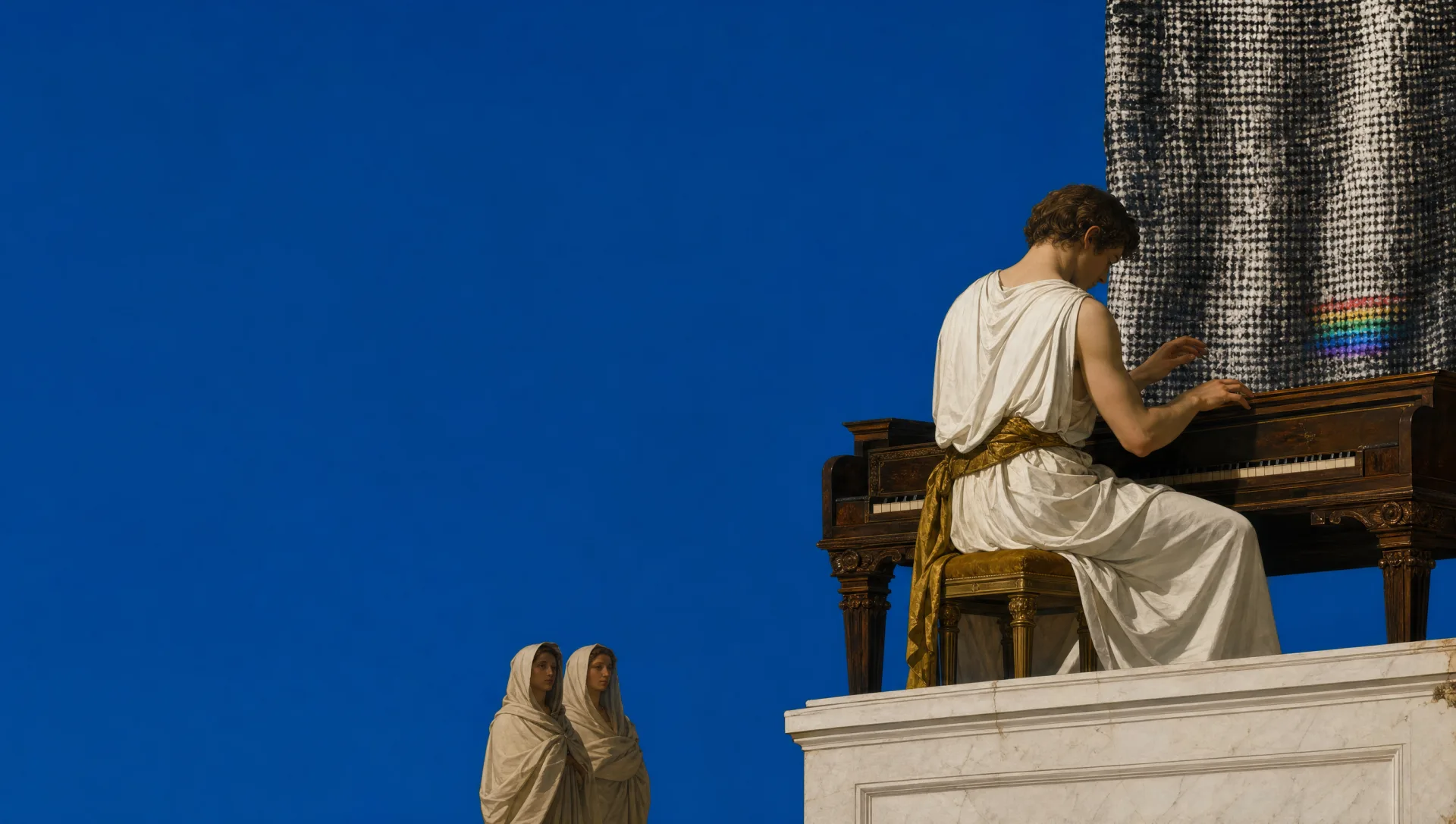
The first phrase changes the air.第一句樂句改變了空氣。

A line rises, bends, and leaves room for the next one. Listening begins as a physical thing.一條線升起、彎曲,為下一條留下空間。聆聽從身體開始。

FeelNo glossary first. Just the soft pull of a phrase returning.不必先看術語表。先感受一個樂句回來時柔軟的牽引。

03 / The score

Then the page becomes physical.然後,頁面變得有重量。

Notes sit on the line where they will sound. Tap one and the recording moves with you. The notation is the timeline.音符坐在它將響起的線上。點一下,錄音就跟著你走。樂譜就是時間線。

Try itChopin Nocturne 20 has the recording, score, story, sources, and credits together.蕭邦《夜曲二十號》把錄音、樂譜、故事、來源和致謝放在一起。

04 / The listening body

Your body hears before your words do.你的身體先於語言聽見。

The shoulder settles. The breath opens. A quiet turn in the harmony becomes a place you recognize.肩膀安定下來。呼吸打開。一個和聲的安靜轉折,成為你認得的地方。

StayThere is no quiz at the end. You can simply listen again.最後沒有測驗。你可以只再聽一次。

05 / When the page waits

The room stays open.房間保持開放。

Begin with one piece. Let it take the time it takes. The rest of the wiki can wait.從一首開始。讓它用它需要的時間。其他的內容可以等一等。

NextChopin, Nocturne 20 in C-sharp minor — 252 seconds, one room.蕭邦,升 C 小調《夜曲二十號》——252 秒,一個房間。

The first room

Start here.從這裡開始。

Chopin's Nocturne 20 is the proof: listening can become a place you return to.蕭邦《夜曲二十號》就是證明:聆聽可以成為一個你願意回去的地方。

Chopin — Nocturne No. 20

A quiet opening, a melody that learns to sing, then a gentle goodbye. Press play; the story and the score keep time with it.安靜的開頭,一段學會歌唱的旋律,然後溫柔地道別。按下播放,故事和樂譜會與它一起走。

Enter the piece →進入這首作品 →

Recording: Wikimedia Commons, CC BY 3.0 · source and credits

An open score beside a resting golden conductor baton

What would you like to hear?你想聽見什麼?

Tell us what you are listening for. We will point you to a place to begin.告訴我們你正在聽什麼。我們會指向一個可以開始的地方。

[email protected]
The rest can wait — browse the wiki其他內容可以等等——瀏覽維基

Every recording and score carries its own license and credit on its page. Nothing here is uncredited.每一份錄音和樂譜,都在自己的頁面上標示授權和致謝。這裡沒有未標示來源的媒體。